

You only see it once you get it
CO2 MITIGATION"You only get it once you get it," was the philosophical remark made by our incomparable Johan Cruyff. It is a statement with broad applicability—even to the global breakthrough Asbeter has achieved from the Netherlands. Looking back at 2025, we can say that we focused our investments primarily on process optimization and market exploration. To pave the way for the major breakthrough involving our patented AC Minerals technology, the process was enhanced with a final thermal step that achieves two goals at once: it enables the circular production of high-quality cement while eliminating all asbestos particles—even at the nanoscale—through complete recrystallization into silicates. This allows millions of tonnes of circular raw materials to be supplied to the market instead of being sent to landfill, serving as either a CO2-neutral cement (as a substitute for clinker) or a raw material for the glass industry.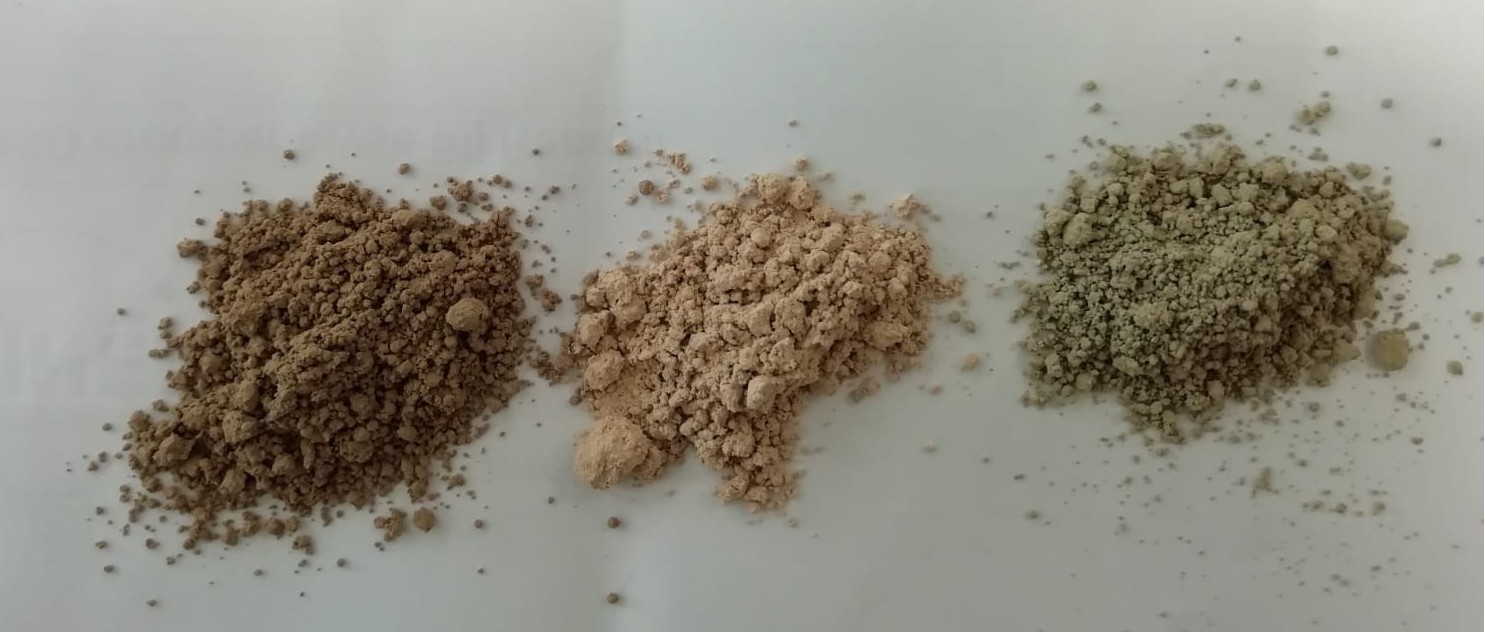
With a subsidy from the Province of North Brabant, a feasibility study for an industrial-scale AC Minerals plant was launched in May 2025. This study was completed for a site in Moerdijk, where the supply of sufficient residual heat and energy to process 75,000 tonnes of material could be guaranteed. It was demonstrated that this annual volume of 75,000 tonnes yields a strong business case and a reduction of 56.000-75.000 tonnes CO2, attracting interest from several market players. However, it also became apparent that the market wants to see a small-scale demonstration plant built to validate the technology and business case before committing, yet is unwilling to invest in such a facility itself.
The Asbeter team is currently working on realizing a demonstration plant with an annual production capacity of 5,000 to 7,000 tonnes and is raising the necessary funding. Stakeholders with a long-term horizon and a sense of social responsibility have been invited to participate.
There remains—as media reports frequently highlight—a significant gap between investing in the scale-up of a promising technology and investing in a commercial-scale plant. It is a gap for which hardly any financial instruments are available. This situation needs to change, particularly if the government-established bodies—such as the Regional Development Agencies (ROM's), InvestNL, and Invest International—are to fulfill their role of supporting key innovations where financial returns may not be immediate. This should certainly apply to a major social innovation like Asbeter's. To this end, the Asbeter team is engaging in discussions with policymakers in The Hague, not least because the company was founded in 2018 at the request of the Ministry of Economic Affairs and Climate Policy (EZK).
Market explorations in 2024 and 2025 focused primarily on players in the waste processing sector seeking new markets—partly because other recycling streams were still resulting in losses. Discussions were held with several stakeholders regarding potential equity participation in the company, with an eye toward international growth and the shared assumption of risks inherent in entering a new market, even one with a promising business case. This market exploration led Asbeter to adopt a somewhat cautious stance regarding the waste sector. Consequently, a strategic reorientation has been underway since April 2026.
Partners for Asbeter's continued development and growth—for which AC Minerals Group B.V. and AC Minerals IP B.V. were established in October 2025—are being sought across a broader spectrum: ranging from waste processing or asbestos remediation firms to industries facing significant CO2 reduction challenges or those interested in the CO2-neutral end product, calcium silicate (such as the glass and construction sectors). In short, stakeholders from diverse sectors.
The revenue Asbeter has generated to date as an operating company—derived from knowledge sharing through research projects for various stakeholders—foreshadows the business strategy of the newly formed AC Minerals Group: licensing the technology to companies in other countries forms the foundation of this approach. The initial working assumption involves selling 30 licenses within EU member states. However, 30 licenses would cover only one-sixth of the European market for processing asbestos-cement roofing.
As early as 2026, Asbeter will initiate the preliminary licensing phase by executing the first work packages for feasibility studies—projects that have already attracted interest from companies in various countries. Revenue of €15 million is expected from this between 2026 and 2030.